I am part of an active online PLC group of art educators that has incorporated choice based studio practices to support student learning through the arts called TAB (Teaching for Artistic Behavior). While most of my fellow group members work five days a week in one school with a permanent studio, I am itinerant and work in a variety of alternative programs. One day a week I have a full choice studio in an art room with storage space, linoleum floors, and three sinks for kindergarteners that I work with for the entire school year. The other days I offer classes with themes, and have a quarterly turn over of students, but am still able to provide students with choice.
This past semester I’ve been teaching a class called Art Inspirations in the homeschool program I work in two days a week. One of the significant topics which is addressed in choice classrooms is: Where do artists get ideas? Some students have created enough art to know that family, friends, nature, favorite toys, screen media, books, imagination, art works, and the materials themselves are sources of inspiration. Other students get to discover these sources of inspiration as part of their participation in a choice studio environment.

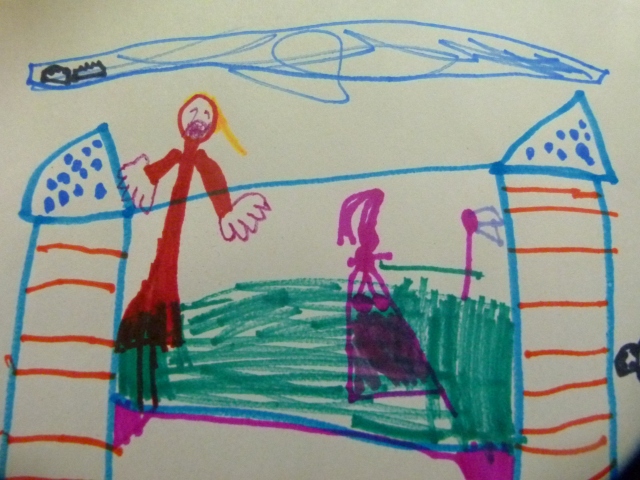
P.S. created this piece in response to the prompt: create art in which line is an essential element.
In the class which I am going to discuss, I posed this question the first day, and the kids came up with a few ideas. I had a list of art themes that I developed for each class meeting for the students to explore. The topics we’ve explored have been dots, lines, shapes, graphic symbols, portraits, still life, and collage/assemblage.
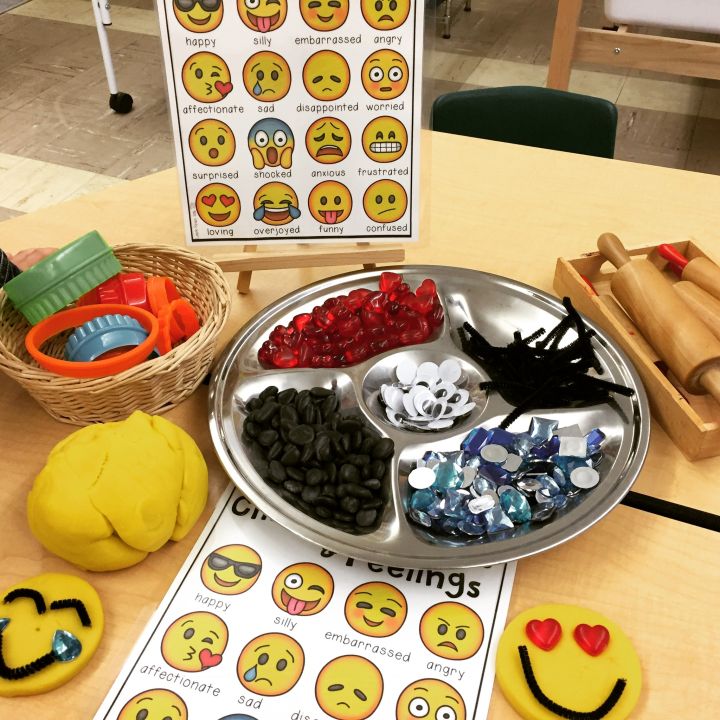
I explain the topic and then offer a variety of two and three dimensional materials for students to choose from. As the topics change some materials like drawing and painting materials are generally available, but others like sticks, pipe cleaners, and modeling clay may be added to the mix. Students select materials that appeal to them, set up a work space, and create. After studio time we have an opportunity to view each student’s piece and share what we find interesting and appealing about the work. The following class meeting I show students examples of how other artists have utilized the idea. The students then also get to learn a bit about artists and art history which is an added bonus!
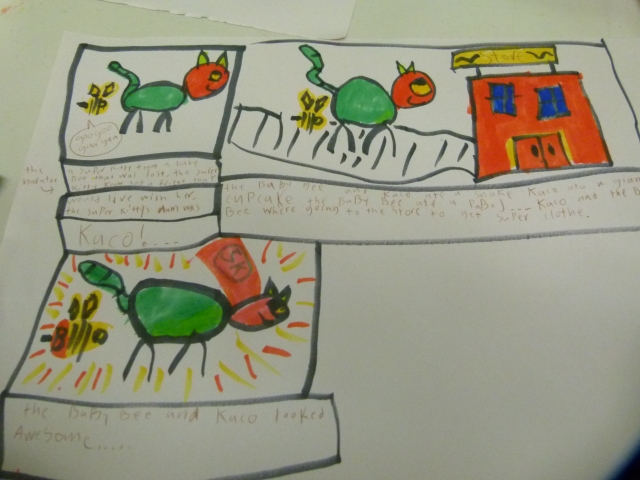
Teaching this class has been interesting. I discovered that my younger students (K-3) were much freer and more divergent in their responses to these prompts than my older group of students (4-8). In fact several of the younger students rarely ever followed the prompt topic but came up with their own ideas that were inspired either by the materials or their imaginations. As far as I’m concerned the class was a success for all students because everyone used studio time wisely. Each one was inspired to create art that was meaningful to them personally. After introducing the portrait prompt TJ wanted to make a helicopter with pipe cleaners. In my local community a noted local artist paints detailed paintings of airplanes. I was able to offer that portraits might not just be of people and pets especially when considering what this local artist does. One boy named A. M. drew wonderful drawings each class. The week the prompt was portraits, he created his own version of the Harry Potter Marauder’s Map on one side of his paper and Hogwarts Castle on the other. I suppose I might be able to say it was a portrait of a castle.
The week afterwards when we were exploring the topic of still life, he drew portraits of characters from an audio book he’d been listening to at home showing that he’d processed what was going on the week before, but had other ideas that were more significant to him that week.
Yesterday I explained to the students that our final prompt would be a two week collage project. I reviewed that a collage was art which glued various cut or torn papers to create an image. I reminded them that Eric Carle the author of The Very Hungry Caterpillar (a book all were highly familiar with) painted his paper and then created collaged illustrations with his painted papers. I demonstrated some gadget printing techniques so we could create our own specialty papers. I had three students out of 6 that created some collage paper for the project. Here’s what the others created: P.S. painted a volcano. TJ created a 3-d volcano with a cone of construction paper attached to a piece of cardboard. He painted lava flowing down the volcano and then wanted three d material to create smoke to pour out of the volcano. I suggested using tissue paper which was a solution he liked. A.M. created a 3d construction using cardboard he had drawn on.
Although students at times seemed to ignore my prompt topics, they were still exposed to the topics such as gadget printing and collage and ways a variety of artists had utilized those themes. As A.M. showed, portraiture could be part of his repertoire, when it was his choice.

In April I hosted a TASK party. Participants are asked to write tasks for others. The group of kids I worked with wanted to write their own tasks. They saw the available materials and had their own ideas, and just didn’t want to create tasks for others, or do tasks other kids came up with. Here is a robot a 12 year old boy was eager to create once he saw the big cardboard tubes.
Professional artwork is generally viewed as superior when it reflects an individual’s own personal expression. Artists that are significant in stature have often pushed the boundaries of art and practiced divergent thinking as well as mastery of media. I enjoy looking at Pinterest and have found lots of helpful teaching information there. I do often wonder why teachers would appear to go gaga about having all students learn how to make cats like Laurel Burch does for instance, as I’ve seen repeatedly on Pinterest. It wouldn’t be so hard to use cats as a prompt and allow students to explore their own ideas on ways to represent cats. Then Laurel Burch’s cats as well as cat art from a variety of artists and cultures could be shared. This would actually give students more self confidence in their own ideas.

E. loves Batman and has made many pieces depicting him. In this case she selected several items for a still life and added Batman into the scene. She also sprinkled poppy seeds on the picture that she found while looking at a seed pod that was in one of the vases. I was a bit annoyed she sprinkled the seeds, but softened when she said they represented snow. She pushed my boundaries as well as those of her art!
I spend time getting to know my students. If they are interested in dinosaurs, horses, or Pokemon for instance I talk about those things with them, and support their interest in creating art about those interests. I have one kindergarten student that has announced she wants to paint every week during studio time. I’ve tried to make painting available in some form or other most weeks which makes her really happy. Students feel comfortable and appreciated as individuals. I believe that has led to their comfort in expressing themselves and in performing “shameless” acts of divergent thinking. And let’s face it. I’ve taught all class projects and though most kids will go along with “the program” there will always be those that question the status quo and don’t buy in. They may do the project but it won’t be their best work, because they really aren’t invested in it. (You might enjoy reading a previous post: Whose Art is it Anyway?”) They might even misbehave and fool around causing mayhem, because they aren’t engaged. Other students will pretend to comply but surreptitiously do what they want rather than “follow directions”. And that creates a classroom which is not a fun place for any of us to be. It’s not open, sincere, and honest. It’s a dictatorship, though it might be a relatively benign dictatorship. When I was working on my master’s degree I was assigned to read Paulo Friere. I loved his ideas about the reciprocity which can exist between teacher and student as they take the learning journey together. I’d rather be a part of that type of classroom.
Expecting students to create cats like a particular artist, to my mind, subliminally sends the message that the student’s idea of a cat or any other idea the student would like to explore isn’t acceptable or good enough. If a teacher wanted to have students create art inspired by Laurel Burch, he/she could have students evaluate how Laurel Burch uses particular art elements such as line, shape, color, and patterns in her creations. Then provide students with a variety of materials for them to create art that could allow them incorporate some of those techniques and ideas if they wish.

Recent painting by N.G. one of my homeschool students. Really love this piece…..in fact am quite envious that it isn’t my piece!
Each day I teach I am learning and inspired by my students and fellow education professionals. Sometimes that learning is about what doesn’t work for me and my students. Looking back over this past school year it’s been pretty wonderful overall, and the low points were challenging but valuable, because they spurred me to reflect and adjust classroom practices. Have a great summer everyone! I look forward to creating some of my own art, and hope you all will too!